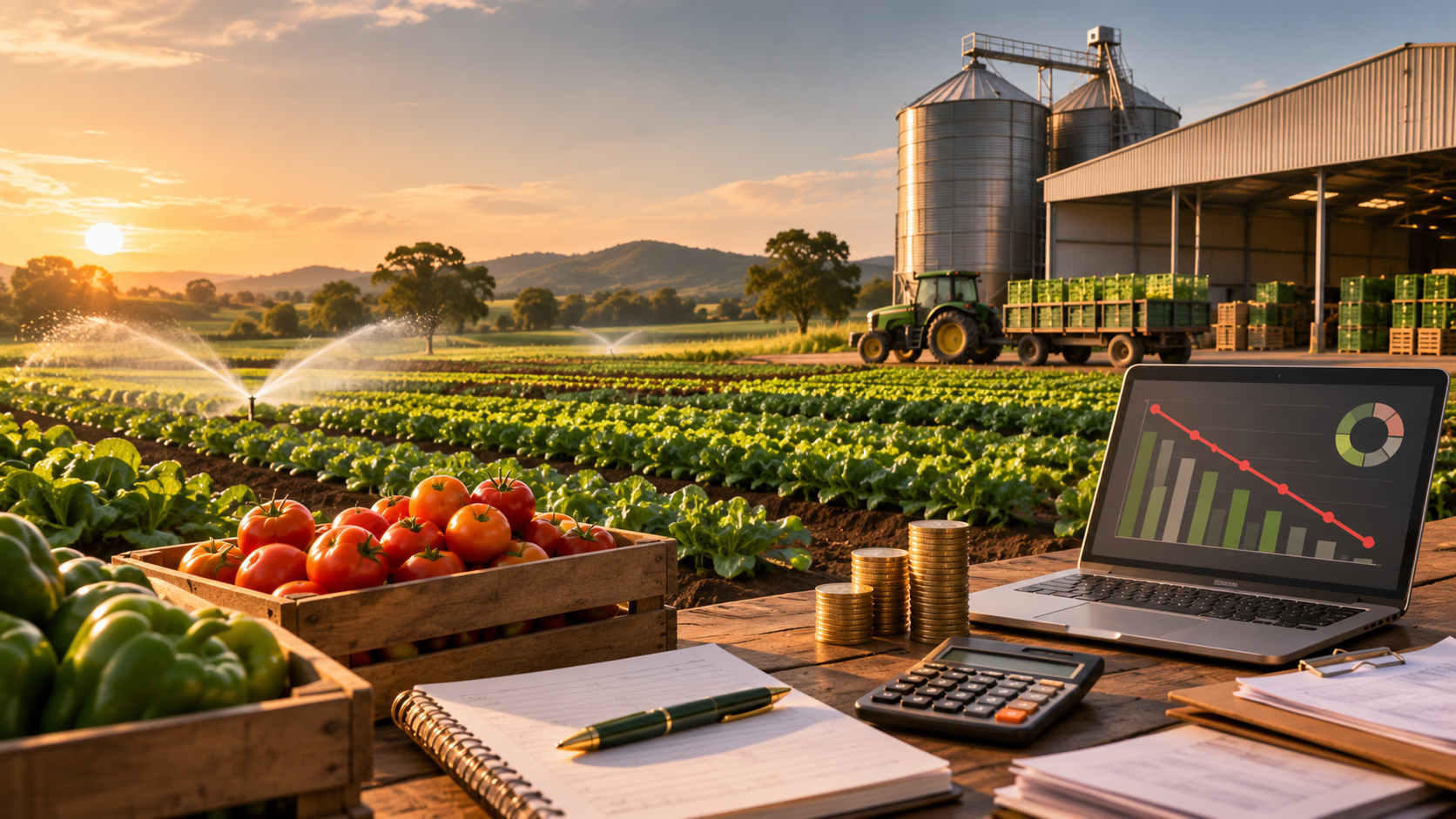
A Farm Can Be Productive and Still Be a Bad Business
Good harvests do not always make good businesses.
Introduction
A farm can produce tonnes of healthy crops and still struggle to make money. The harvest may be impressive, the land well managed and production targets met, yet the business behind it could be losing value.
This is one of the uncomfortable realities of commercial agriculture: production and profitability are two different things.
For many farming operations, success is measured by what comes out of the ground. How much was harvested? How many hectares were cultivated? How much did production increase? These are useful measures, but they tell only part of the story.
The more important question is what happens after the harvest.
Produce that has no committed buyer can quickly become a liability. High transport costs can erode margins. Poor storage can reduce the value of an entire harvest, while weak pricing decisions may leave a farmer selling below the actual cost of production.
In each case, the farm has done its job. The business has not.
The problem starts before planting
A common mistake is to treat the market as the final stage of farming. Production begins first, with the expectation that buyers will be found when the produce is ready.
That approach leaves farmers exposed to changing prices, limited bargaining power and the possibility of having more produce than the market can absorb.
Commercial farming requires a different way of thinking. Decisions about what to plant should be informed by demand, expected selling prices, production costs and the requirements of potential buyers. The logistics of getting produce to market must also be considered before the first harvest.
A farm should not simply ask how much it can produce. It should understand how much it can sell profitably.
Productivity needs commercial discipline
Good agricultural practices remain essential, but they cannot compensate for weak business planning. A productive farm still needs cost control, reliable supply arrangements, efficient logistics and a clear understanding of its customers.
This also means looking beyond revenue. A large sale does not necessarily represent a good return when input costs, labour, transportation, losses and other operating expenses are accounted for.
The difference between a productive farm and a profitable agricultural enterprise often lies in the decisions surrounding production rather than production itself.
Building farms that make commercial sense
Agriculture requires more than the ability to grow crops. It requires an understanding of how production connects to markets, how costs affect returns and how the entire operation can be sustained over time.
At Sevnine, we believe these considerations should shape an agricultural project from the beginning. Production planning and market strategy should work together, with the realities of supply, logistics and commercial demand informing the decisions made on the farm.
A good harvest is worth celebrating. But the real measure of a farm is whether it can consistently turn what it produces into a viable business.
Because growing the produce is only part of the work. Making the numbers work is what makes it an enterprise.
Written by